


Start With What Your Walls Actually Face
A bathroom wall takes more punishment than most people realise. It is not just the occasional splash from the basin. In a typical British home, those walls deal with steam from hot showers, condensation that settles on cold plaster overnight, soap scum, shampoo, hard water limescale, and the odd enthusiastic towel flick. In older Victorian terraces and 1930s semis, the walls are often cold, which makes condensation worse and gives mould a foothold behind the tiles.
So before you fall in love with a colour, think about function. Ask yourself three questions: how wet does this wall get, how often will you clean it, and what is behind the plaster? Get those answers right and your tiles will still look sharp in ten years. Get them wrong and you will be scrubbing grout with a toothbrush every weekend.
Moisture Resistance: Know Your Tile Types
Not every tile belongs in a shower. Here is how the main options behave in a British bathroom.
- Ceramic wall tiles — glazed, light, cheap and easy to cut. Perfect for walls outside the immediate shower zone, and ideal for smaller bathrooms where weight is a concern.
- Porcelain — denser and less absorbent (usually under 0.5% water absorption), so it copes happily inside a shower enclosure. It is heavier and harder to cut, so budget for that.
- Natural stone — beautiful, but it needs sealing and it hates limescale. In hard water areas such as London, the South East and much of East Anglia, marble and limestone can stain and dull quickly. Only use it if you enjoy maintenance.
- Glass — very easy to wipe down and brilliant for small bathrooms where you want light to bounce around. Expensive, and precise cutting is essential.
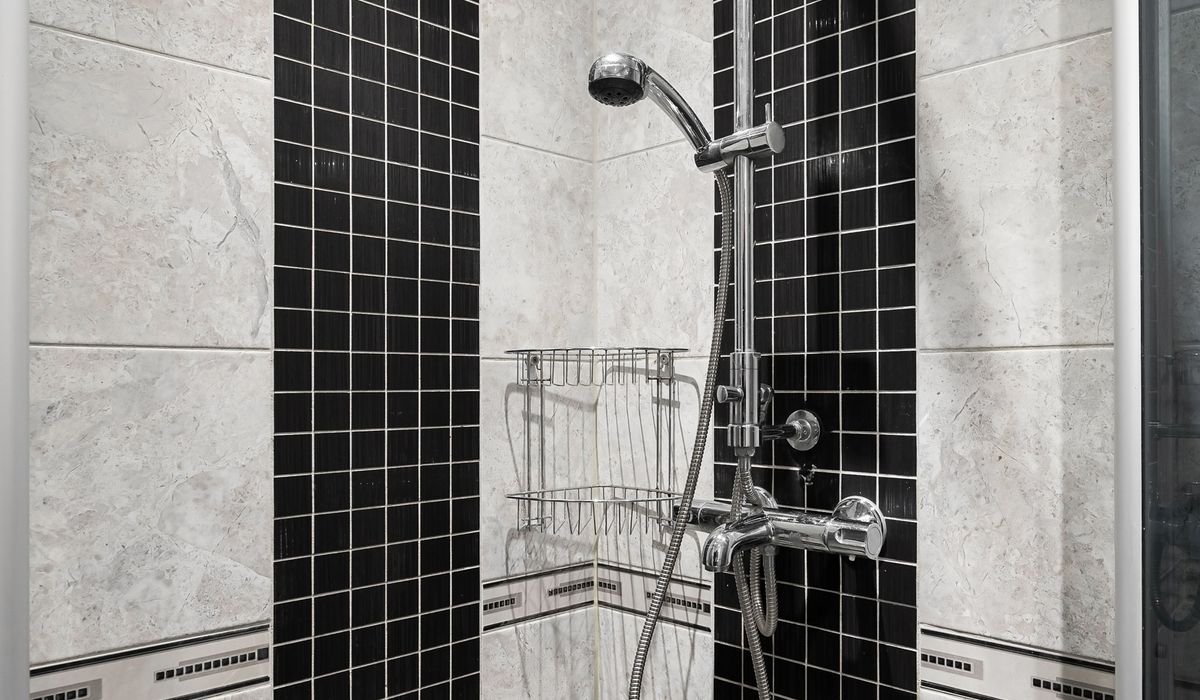
One practical rule: anything inside a shower enclosure or directly above a bath should be porcelain, glass, or a well-glazed ceramic. Save the delicate stuff for feature walls away from the spray.
Slip Ratings and the Wall-to-Floor Question
Slip ratings are mainly a floor concern, but they matter the moment your wall tile meets the floor. If you are tiling a wet room, or running the same tile from wall to floor, check the slip resistance before you buy. In the UK, look for a pendulum test value (PTV) of 36 or above on wet floors, or an R rating of R10 minimum in bathrooms, R11 for a walk-in shower. Never put a polished gloss tile on a bathroom floor, no matter how good it looks in the showroom — it turns into an ice rink with a bit of shampoo on it.
For walls themselves, texture is the thing to watch. A slightly textured tile in the shower can grip soap scum in its surface, while a smooth glazed tile wipes clean in seconds. Slip resistance and easy cleaning often pull in opposite directions, so decide which matters more where.
Cleaning: The Enemy Is Grout and Texture
Most bathroom cleaning misery comes down to two things: grout lines and surface texture.
- Fewer, thinner grout lines mean less to scrub. Large-format tiles are brilliant for this, but they need very flat walls.
- Epoxy grout costs more but resists mould and staining far better than standard cement-based grout, especially in shower areas.
- Bevelled metro tiles look lovely but each bevel traps grime. If you love the look, use a mid-grey or charcoal grout that hides discolouration instead of bright white.
- Matt finishes hide water marks well but can hold limescale in the surface grain. Gloss shows every streak but wipes down quickly. In hard water areas, gloss plus a squeegee is often the easiest combination.
- Textured and mosaic tiles are the worst offenders. Beautiful in a hallway, a nightmare above a shower.
Whatever you choose, plan your cleaning routine around it. A quick wipe after each shower beats an hour of scrubbing once a month.
Weight, Walls and What Holds the Tiles Up
This is the part British homeowners most often overlook. Your tiles have to be supported by something sound. Bare gypsum plaster can generally take around 20kg per square metre, plasterboard around 32kg, and tile backer board 60kg or more. Heavy porcelain or stone can easily exceed the plaster limit, which means either stripping back to the brickwork or overboarding with a cement-based backer board.
Inside a shower or above a bath, tanking is not optional. A tanking membrane or liquid kit behind the tiles stops water reaching the plasterboard and the timber frame. Do this once, properly, and you will never have to explain a damp patch to a surveyor. Also check that any existing paint or wallpaper is removed — tiles will not grip a painted surface reliably.
Making the Final Choice
Once the practicalities are settled, style gets much easier. Pick a base tile in a neutral, moisture-resistant material for the bulk of the room, then spend your budget on a feature wall, a niche, or a splashback behind the basin. Buy a spare box — tiles get discontinued, and matching a shade three years later is almost impossible.
Finally, order samples and look at them in your own bathroom light, not the showroom's. British bathrooms are often small and north-facing, and a tile that gleams under spotlights can look grey and flat at seven in the morning in February. Choose for how the room actually feels, and the practical choice will look beautiful too.


Leave a reply